Chromates are salts of chromic acid (H2CrO4). The chromate anion CrO42− is yellow and has a tetrahedral structure.
The chromates described here, such as calcium or sodium chromate, form thermochemically from chromium(III) oxide (Cr2O3), an alkali metal oxide (sodium oxide) or an alkaline earth metal oxide (calcium oxide) at temperatures between about 250 °C and about 800 °C in the presence of oxygen.
The higher the chromium(III) content, the higher the alkali or alkaline earth metal content and the higher the temperature, the higher the rate of oxidation of chromium(III) to chromium(VI).
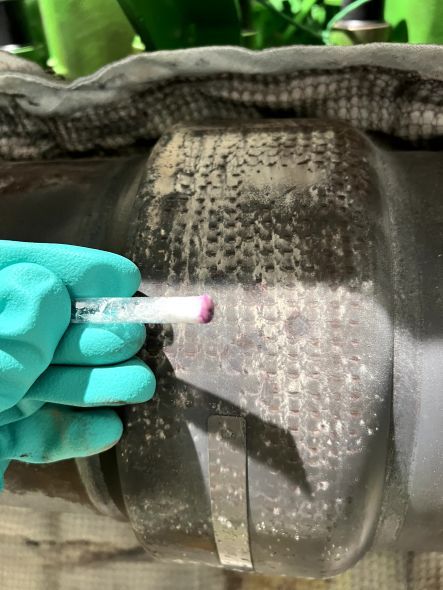
When insulation materials containing alkali or alkaline earth metals come into contact with chromium-containing hot parts, calcium oxide or sodium oxide is released, in particular through vibration and thermal stress (abrasion, wear), and meets the chromium oxides of the stainless steel alloys at high operating temperatures. Over time calcium or sodium chromate forms, which settles as a fine yellow powder between the inner surface of the insulation and the hot part, or is carried around the plant by thermal currents.
For a long time the yellow dusts were mistaken for sulphur deposits. Calcium chromate also forms when calcium-containing assembly pastes or sealing materials are used on chromium-containing bolts, nuts and flange connections.