CHROMATE EXPERTSDetect|Control|PreventDon’t give Chromium(VI) a chance!

Decontamination and substitution

Chromate remediation

Remediation begins with the removal of the thermal insulation and ends with the proof of disposal.

Decontamination

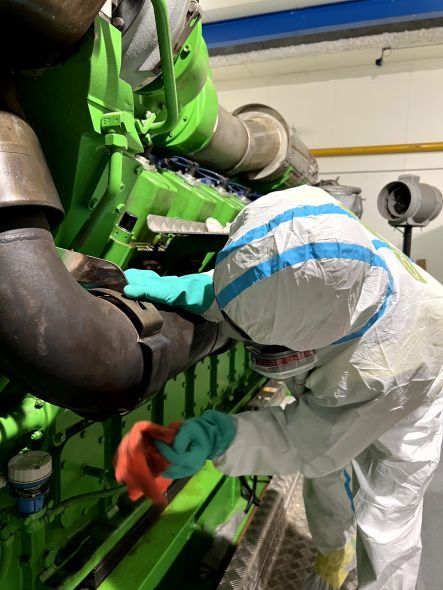
Removal and cleaning

Chromium-containing engine hot parts and exhaust line components (for example in CHP plants) that have been fitted with (textile) insulation, in particular calcium-containing insulation, are frequently contaminated with carcinogenic calcium chromate as a result of thermochemical reactions.

Especially during maintenance work on gas and diesel engines, workers are exposed to chromium(VI) compounds, in particular calcium chromate, which often appears as a yellowish dust.

Before the insulation systems can be substituted, the contaminated insulation elements must be removed and disposed of. The engine hot parts must be thoroughly cleaned, and thus decontaminated, before substitution begins. The work is coordinated by The Chromate Experts and carried out in close consultation with the client.

  • Chromate remediators in the network: Kavarmat® and The Chromate Experts UK Ltd.
  • Removal of thermal insulation as part of the scope of work
  • Chromate disposal through MRP, Effinowicz Group
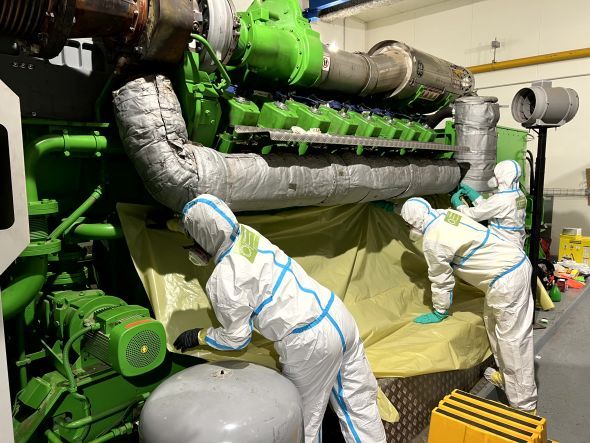
Decontamination of chromate-contaminated insulation on a CHP plant

Substitution

The new insulation

Decontaminated CHP engine before new insulation is fitted

The decontamination of substances that are harmful to health and toxic to the environment has top priority; the risk to people and nature is too high. The subsequent substitution then gives everyone involved the necessary safety again.

Insulation materials free of alkali and alkaline earth metals can effectively prevent the formation of carcinogenic chromium(VI) compounds, in particular calcium chromate.

Article 4(1) of Directive 2004/37/EC requires replacement in so far as technically possible. Since the risk of chromate formation no longer exists after substitution of the previous insulation systems, substitution is not only sensible but also technically and economically feasible, and must therefore be carried out.

If calcium-containing insulation materials lead to the formation of carcinogenic chromates, materials must be developed that prevent this formation, even if at first it is difficult to question what has proven itself. The health of those who come into contact with these products must always come first.

Contact

Chromate remediation in the network

Markus Sommer, The Chromate Expert

Markus Sommer

Kavarmat®, chromate remediation

  • Decontamination
  • Substitution
  • High-temperature insulation free of alkali and alkaline earth metals

Insulation materials contaminated with chromate are hazardous waste requiring labelling. Not only the removed insulation but also the protective clothing worn during the work and all aids used during decontamination must be stored under special conditions and disposed of properly.

kavarmat.com